

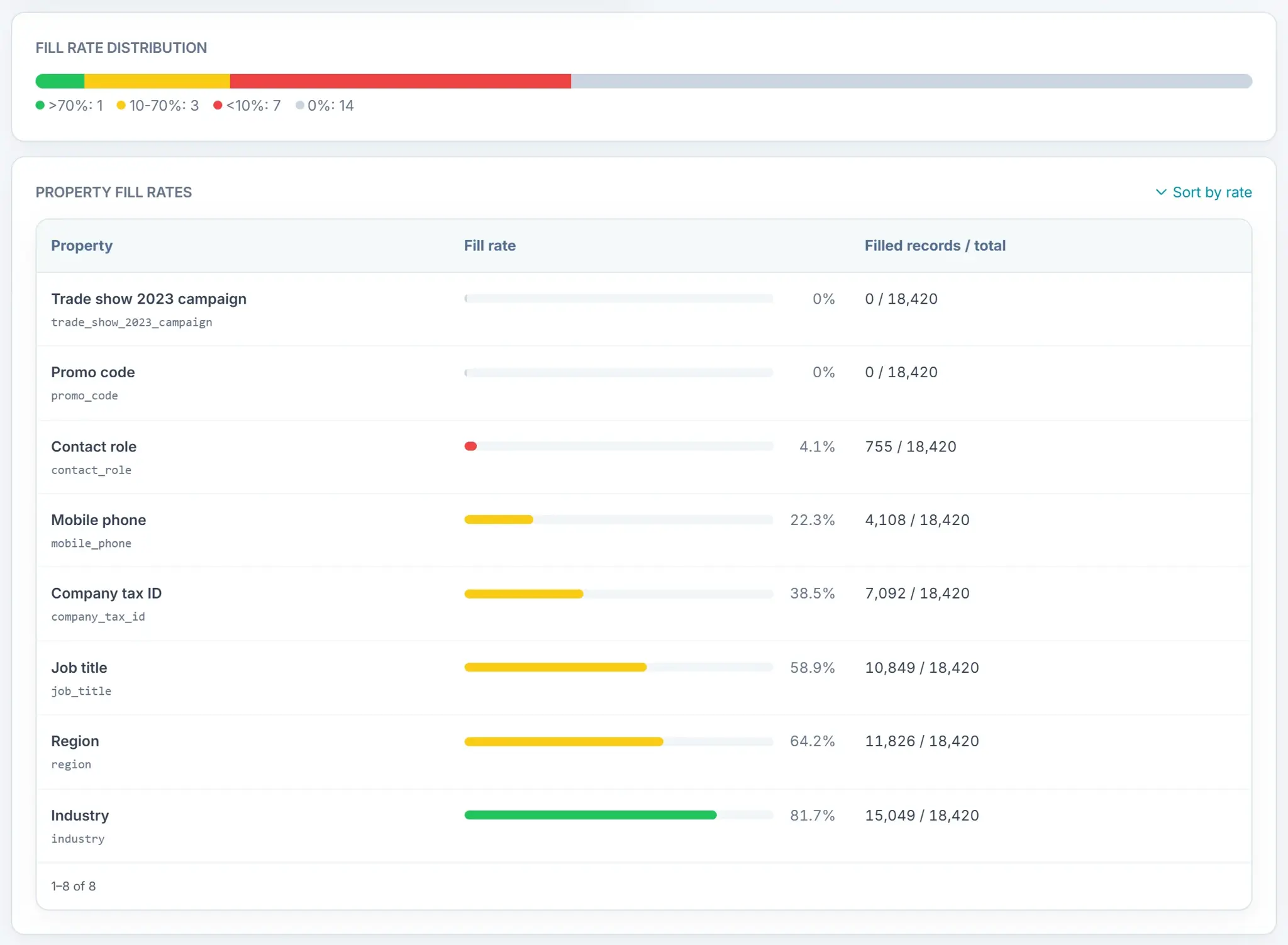

What are ghost properties and what should you do with them?
They are custom properties nobody fills in, or two properties that store the same thing, such as “annual revenue” and “company revenue”. Each one adds noise to forms and views.
Why do contacts without a company break your account view?
A contact from a target account fills in a form but is not associated with the company. The account looks inactive, the rep does not see the new contact and the attribution is lost.
What happens when lifecycle stages contradict the deals?
Contacts marked as subscribers with open deals, customers that regress to lead, stages skipped without a trace. Funnel metrics stop meaning anything.
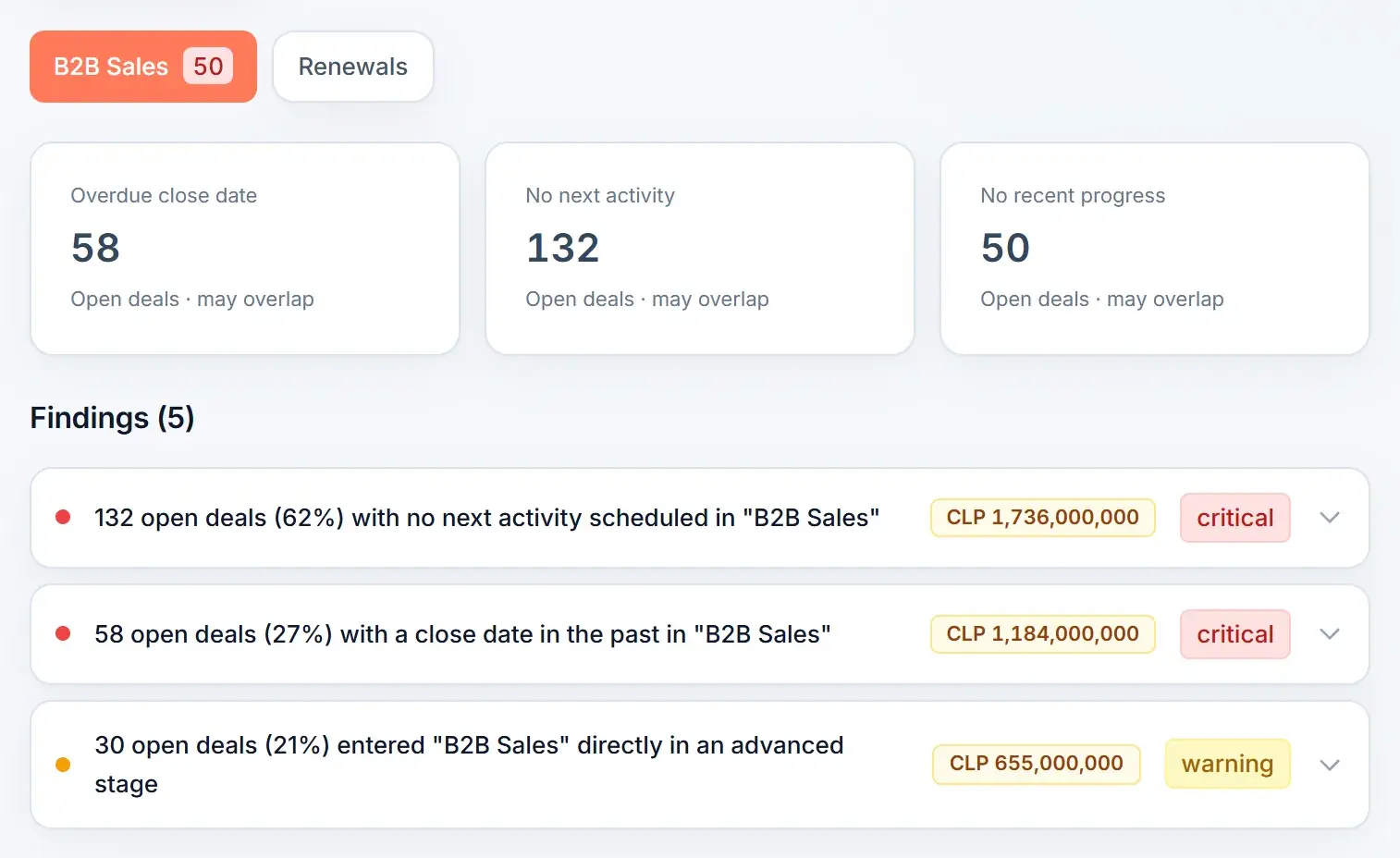
Why are overdue close dates a forecast problem?
An open deal whose close date already passed is still counted in the forecast for a period that is over. Add deals with no next activity and the pipeline looks bigger than it is.
How do inconsistent formats break workflows?
“Chile”, “CL” and “chile” in the same field. A workflow filtering by one value misses the others and a report shows three bars for the same country.
Where do placeholder values like “test” or “N/A” come from?
Almost always from a field that was made required when the record is created. The rep does not know the value yet, needs to save and types anything.
Why should the amount be required by stage and not at creation?
Deals past the proposal stage with no amount, or with no contact, make pipeline value unreliable. Forcing those fields at creation does not work either: early deals rarely know the amount.

How do you measure all seven before fixing anything?
Fixing at random wastes weeks. Measure first, rank by business impact and start with what affects the forecast.
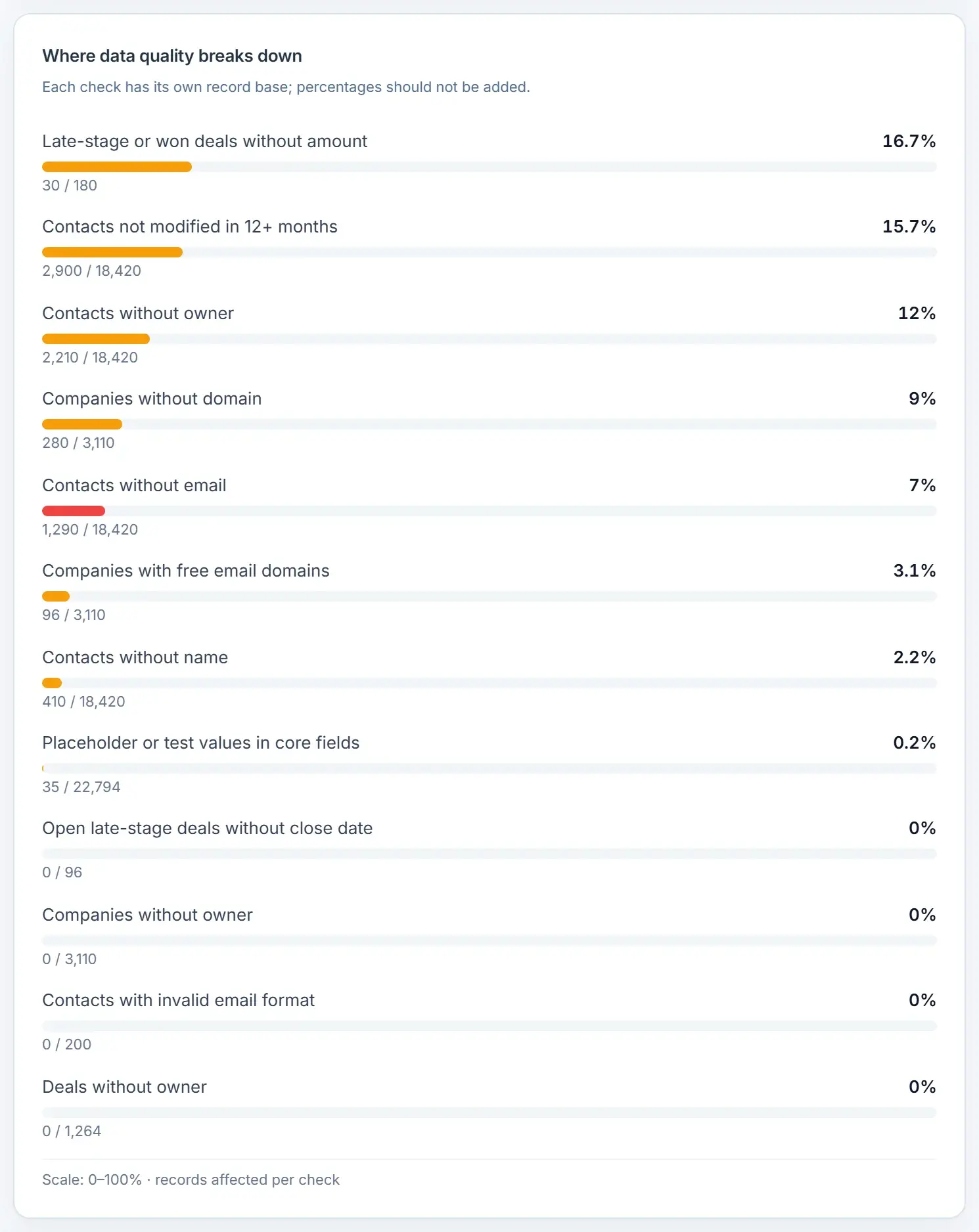
HubSpot Audit from Revenue Hub Latam measures these signals in the data model and process pillars, and labels the inferred ones as signals to confirm.
If you also suspect duplicate records, the duplicates guide explains how to decide what to merge in HubSpot.